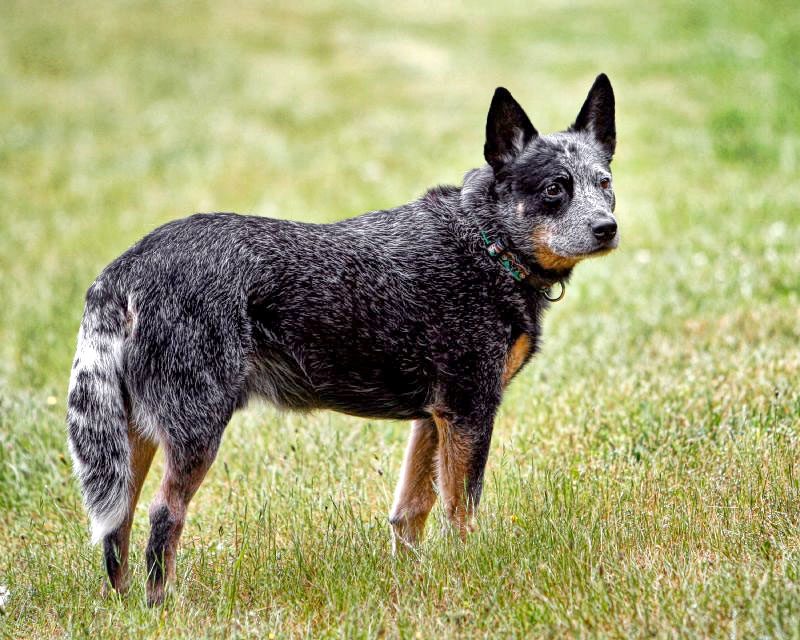
Which Mendelian variants matter most for Australian Cattle Dogs?
The Mendelian-disease table above lists variants screened in 982 Australian Cattle Dogs (Donner 2023). Six matter most by carrier frequency and impact.
Progressive Rod-Cone Degeneration (PRCD)
Progressive Rod-Cone Degeneration in Australian Cattle Dogs is an autosomal-recessive retinal degeneration caused by a variant in the PRCD gene. Affected dogs lose night vision first, then day vision, and are blind by middle age. 30.7% of Australian Cattle Dogs in the Donner cohort carry the variant (n=980). One in three. It is the most common Mendelian variant in the breed.
Testing is widely available. The Orthopedic Foundation for Animals and most commercial DNA labs cover PRCD. Breeders can use carrier status to avoid carrier-by-carrier pairings.
Dilated Cardiomyopathy risk factor (PDK4-related, discovered in Doberman Pinschers)
Dilated cardiomyopathy risk factor in Australian Cattle Dogs is an autosomal-dominant risk variant, caused by a PDK4-related variant discovered in Doberman Pinschers. The variant shows incomplete penetrance, meaning not every carrier develops the condition. 5.1% of Australian Cattle Dogs in the Donner cohort carry the variant (n=982).
This is a high-severity condition. Affected dogs develop progressive heart-muscle weakness and can present with arrhythmias, syncope, or sudden death. Testing is available. Carriers warrant cardiac screening (echocardiogram) starting in young adulthood and repeated annually.
Cystinuria Type II-A
Cystinuria Type II-A in Australian Cattle Dogs is an autosomal-dominant condition discovered in this breed. The condition causes excess urinary cystine excretion and predisposes to bladder and kidney stones. 2.3% of Australian Cattle Dogs in the Donner cohort carry the variant (n=982).
Not every dog with the variant forms stones. Donner S4 penetrance data confirmed 2 of 3 at-risk dogs showed the phenotype (maximum 67% penetrance). Affected dogs are managed with dietary intervention (low-protein, alkalinizing formulations) and monitoring. Testing is available.
Primary Lens Luxation (PLL)
Primary Lens Luxation in Australian Cattle Dogs is an autosomal-recessive eye condition caused by a variant in the ADAMTS17 gene, causing the lens to dislocate from its zonular support. Affected dogs lose vision in the affected eye and face painful glaucoma if untreated. 7.5% of Australian Cattle Dogs carry the variant (n=982).
Testing is widely available. The OFA and commercial labs cover PLL screening. Early detection allows surgical intervention to prevent blindness.
Degenerative Myelopathy (DM)
Degenerative Myelopathy in Australian Cattle Dogs is an autosomal-recessive spinal-cord degeneration with incomplete penetrance. Affected dogs typically present with progressive hind-limb weakness in middle to late adulthood. 5.1% of Australian Cattle Dogs in the Donner cohort carry the variant (n=982).
Not all carriers become symptomatic. Testing is available from commercial labs. Affected dogs benefit from physical therapy and weight management to slow progression.
How should I test my Australian Cattle Dog?
A breed-specific panel from a CLIA-accredited lab is the high-yield path. The minimum useful set for Australian Cattle Dogs is PRCD (progressive rod-cone degeneration), the PDK4-related DCM risk variant, cystinuria Type II-A, PLL (primary lens luxation), DM (degenerative myelopathy), and the cystinuria Type I-A variant.
What should I feed an Australian Cattle Dog?
Australian Cattle Dogs are working herding dogs with metabolisms tuned for full-day stockwork. A pet Australian Cattle Dog eating a maintenance kibble in a suburban yard is being fed for a job they aren’t doing. Feeding well means matching caloric density and nutrient timing to the dog’s actual activity level, then protecting against the breed’s known cardiac and urinary vulnerabilities.
The cardiac risk variant demands taurine clarity. The PDK4-related dilated cardiomyopathy risk is present in 5.1% of the breed (Donner 2023, n=982). While the penetrance is incomplete, carriers warrant a diet explicitly formulated for cardiac support. This means taurine content above the AAFCO minimum for dogs; ask your veterinarian or a board-certified veterinary cardiologist for a breed-specific target range. Look for formulations where taurine is listed as a supplement, not inferred from meat content. Do not feed grain-free unless a veterinary cardiologist has cleared it for your individual dog.
Joint and bone health in an active breed means calcium-phosphorus discipline. Australian Cattle Dogs were bred for agility in rough terrain and their metabolism expects sustained activity. The NRC 2006 nutrient requirements set the calcium-to-phosphorus ratio target at 1.1:1 to 2:1 for adult dogs. For a working or active pet, aim for the middle of that range (1.4:1 to 1.6:1) to support both bone density and muscle recovery. Phosphorus deficiency is rare; excess calcium is the common mistake in home-prepared diets for active dogs.
Cystinuria Type II-A and Type I-A prevalence (2.3% and 1.3% carriers, respectively) makes urinary pH management relevant. While only 2.3% carry the Type II-A variant (Donner 2023, n=982), when present it becomes the feeding priority. The condition responds to alkalinizing diets that are lower in methionine and total protein, which reduces urinary cystine load. Commercial stone-prevention diets exist and are worth discussing with your vet if cystinuria is detected. For unaffected dogs, moderate protein (20% to 25% crude protein in adult maintenance) supports muscle without driving excessive urinary amino acid load.
Activity-matched feeding prevents weight creep. Australian Cattle Dogs are lean, muscular dogs, and no breed-specific obesity variant has been identified in the Donner 2023 cohort, but suburban underactivity can create mismatch between food intake and expenditure. A working Australian Cattle Dog needs higher caloric density and strategic meal timing around work. A pet Australian Cattle Dog needs smaller portions and consistent activity structure to justify premium kibble. Cited life expectancy is 14 years (McMillan 2024 / VetCompass); that longevity stretches longest when adult weight remains stable through middle age.
What we don’t know
The mechanism of incomplete penetrance in the PDK4-related cardiomyopathy risk variant is unresolved. We do not know which genetic or environmental factors determine whether a carrier develops clinical disease. Screening carriers annually with echocardiography is the practical approach until that mechanism clarifies.
The honest summary is that published environmental analyses for Australian Cattle Dog-specific health outcomes have been sparse. We lack breed-club health surveys with detailed prevalence data for conditions like PLL or DM. The Donner 2023 carrier frequencies are solid, but the actual clinical incidence of affected dogs (dogs with two copies and a positive phenotype) remains uncertain for most conditions in this breed.
Cystinuria Type II-A was discovered in Australian Cattle Dogs, yet real-world management data in the breed is limited. Feeding responses and stone-recurrence rates in treated Australian Cattle Dogs have not been systematically documented. Veterinary nephrologists have case experience; the breed-specific guidance remains empirical rather than evidenced.
Frequently asked questions about Australian Cattle Dogs
What is the most common genetic disease in Australian Cattle Dogs? Progressive Rod-Cone Degeneration (PRCD), a retinal disorder. 30.7% of Australian Cattle Dogs carry the variant (Donner 2023, n=980), making it the most frequent Mendelian condition in the breed. Affected dogs lose vision by middle age.
How long do Australian Cattle Dogs live? Cited life expectancy is 14 years (McMillan 2024 / VetCompass, n=117, 95% CI 13.2 to 15.1). The breed’s genetic diversity rank is 49 of 107 breeds in the atlas (lower numbers indicate tighter bottlenecks).
Are Australian Cattle Dogs prone to hip dysplasia? Hip dysplasia prevalence data specific to the breed is not yet published in the Donner cohort or OFA database at sufficient sample size. The breed’s moderate genetic diversity and working-dog morphology suggest lower risk than giant or heavily selected breeds, but individual screening remains prudent before breeding.
Should I do a DNA test on my Australian Cattle Dog? For breeding stock, yes. A panel covering PRCD, the PDK4-related DCM risk variant, cystinuria Type II-A, PLL, DM, and the Type I-A cystinuria variant captures the breed’s highest-frequency Mendelian conditions. Carrier status informs mating decisions and helps avoid carrier-by-carrier pairings in PRCD (the 30.7% carrier frequency means this is a real probability).
What is the best diet for an Australian Cattle Dog? Match the diet to the dog’s actual activity level. Working or very active Australian Cattle Dogs need higher caloric density and taurine content (especially if carrying the PDK4-related DCM risk variant). Pet Australian Cattle Dogs do well on moderate-protein (20% to 25% crude protein), grain-inclusive formulations with controlled calcium and a 1.4:1 to 1.6:1 calcium-to-phosphorus ratio. Avoid grain-free unless a cardiologist has cleared it for your dog’s risk profile.
Can Australian Cattle Dogs go blind from PRCD? Yes. Progressive Rod-Cone Degeneration is a retinal condition that causes night blindness first, then progressive day blindness. Affected dogs are typically blind by middle age. Testing before breeding prevents affected litters.
Are Australian Cattle Dogs good with kids? Australian Cattle Dogs are energetic and breed-true to herding instinct, which means they may nip at moving targets, including children. Early socialization and consistent structure are essential. The breed thrives in active households and is not a good fit for families seeking a low-energy companion.