snıff

Beagle

46 Beagles in the atlas. Every number on this page has a source.

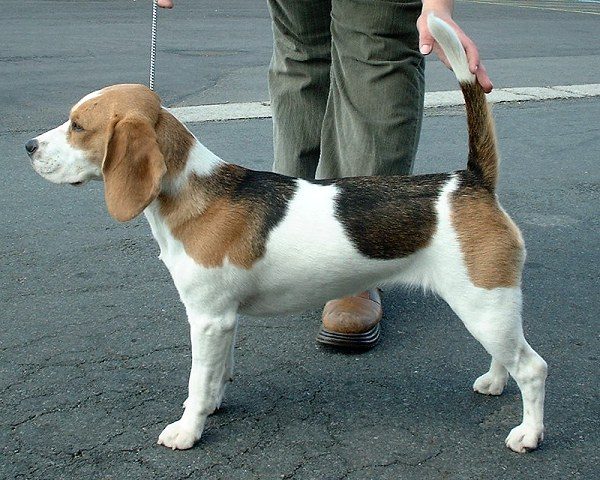
The Beagle is one of the dog world's most cheerful and determined characters. Bred for centuries as a pack hound, their job was to follow a scent trail

What the atlas says about Beagle

In the atlas, the Beagle clusters consistently as Beagle (100% of the 46 dogs here). At the trait loci, FGF4_retrogene_CFA12 runs lower than average (0% here vs 80%); IGF1 runs higher than the atlas average (96% here vs 55%). Dogs here sit in a relatively sparse region of the atlas, fewer close neighbors than typical.

Low breed predictability score (0.23), individual dogs of this breed vary widely in genetics, suggesting active substructure or sub-population diversity.

Closest genetic neighbors in the atlas: Toy Poodle, Dachshund, Bloodhound, Miniature Pinscher, and Havanese.

Genetic dimensions · CanVAS atlas

What the genome says about Beagle

Computed from the 18,477 research dogs in the Atlas.

Dogs in the Atlas
46Founders
25 from Hayward2016, 10 from Spatola, 6 from Shannon
Genetic diversity
0.32Moderate
Mean heterozygosity across the breed. Ranks 67th most genetically tight of 107 ranked breeds.
Cluster structure
Splits into two genetic sub-populations
Intra-breed RMS distance: 27.68 · likely working/show-line, regional, or kennel lineage split.
Nearest genetic relatives
  1. Toy Poodle3.56
  2. Dachshund3.67
  3. Bloodhound3.77
  4. Miniature Pinscher3.92
  5. Havanese4.12
Top-10 PC corrected Euclidean. Lower = closer.
How long they live
11.8years (atlas median)
Trait genetics
Allele frequencies at named morphology loci

Frequency of the alternate allele in this breed at each locus's representative SNP.

Body size
IGF196%
HMGA284%
SMAD262%
LCORL89%
STC244%
ADAMTS1756%
Leg length
FGF4·CFA1863%
FGF4·CFA120%
Coat
RSPO260%
FGF560%
KRT7197%
MC1R89%
Ear set
MSRB378%
Skull shape
BMP379%
SMOC280%
What you see when you look at a Beagle

What does the genome say about how a Beagle looks?

Beagles look the way they do because of a small set of fixed and near-fixed morphology genes that, taken together, define the visible breed. Each translation below pairs the gene with the trait an owner actually sees, the breed's allele frequency at that locus, and a one-clause causal phrase.

Size and build

IGF1 is near-fixed at 96% for the small-body allele, which keeps the breed compact relative to its working-line ancestors.

HMGA2 sits at 84%. HMGA2 is a chromosome-10 size locus that acts together with IGF1, and intermediate frequencies reflect partial commitment to the dominant size variant.

SMAD2 sits at 62% at the chromosome-7 height locus.

LCORL is near-fixed at 89%, the NCAPG/LCORL height locus that is one of the strongest single contributors to canine body size.

STC2 sits at 44%.

ADAMTS17 sits at 56%. ADAMTS17 is a body-size locus also linked to lens disorders.

Leg length

The FGF4 retrogene on chromosome 18 sits at 63%. This is the leg-length variant. The intermediate frequency means some dogs in this breed carry the short-legged allele and some do not.

The FGF4 retrogene on chromosome 12 is at 0%, leaving most of this breed clear of the chondrodystrophic intervertebral disc disease risk.

Coat type, length, and color

RSPO2 sits at 60% for the furnishings variant. Furnishings (the eyebrow-and-mustache pattern seen in Schnauzers and Wheaten Terriers) vary across the population at this intermediate frequency, and visible expression depends on the specific allele combination each dog carries.

FGF5 sits at 60% for the long-coat variant. Coat length is influenced by other loci as well, so intermediate FGF5 frequencies do not always correspond to intermediate visible coat lengths.

KRT71 is near-fixed at 97% for the wavy/curly variant. Coat curl phenotype varies across breeds at this fixation depending on modifier loci, and visible expression is not always curled even when the locus is fixed.

MC1R is at 89% at the representative SNP. MC1R controls the switch between red-to-gold and black-to-brown pigment, with the e/e homozygous genotype producing the gold-to-red spectrum by blocking eumelanin (black and brown pigment).

Ears

MSRB3 sits at 78% for the drop-ear allele, which is why ear set varies across the breed.

Skull shape

BMP3 sits at 79%, contributing to the breed's moderate, mesaticephalic head shape rather than the extreme brachycephalic form.

SMOC2 sits at 80%, contributing to the breed's moderate head shape.

Mendelian-disease genetics

What genetic diseases do Beagles carry?

From a panel of 250 Mendelian-disease variants screened in 1,054,293 dogs (Donner et al. 2023), Beagles carry 36 of them at observable frequency. Carrier frequency is not clinical risk. Most recessive variants require two copies for disease expression; many dominant variants show incomplete penetrance. Read this as a population fingerprint of what's in the gene pool, not a per-dog prediction.

n = 5,245 dogs · 1 variant tested · OMIA:000157-9615 · omia.org →
Factor VII Deficiency
Autosomal recessive
moderate 10.5%
n = 5,263 dogs · 1 variant tested · OMIA:000361-9615 · omia.org →
Cone-Rod Dystrophy (cord1-PRA/crd4)
Autosomal recessive (Incomplete penetrance)
moderate 10.5%
n = 5,273 dogs · 1 variant tested · OMIA:001432-9615 · omia.org →
n = 5,292 dogs · 2 variants tested · OMIA:000162-9615 · omia.org →
Hypocatalasia
Autosomal recessive
low 6.9%
n = 5,292 dogs · 1 variant tested · OMIA:001138-9615 · omia.org →
low 1.7%
n = 5,282 dogs · 1 variant tested · OMIA:001509-9615 · omia.org →
Degenerative Myelopathy (DM)
Autosomal recessive (Incomplete penetrance)
low 1.7%
n = 5,292 dogs · 1 variant tested · OMIA:000263-9615 · omia.org →
n = 4,993 dogs · 1 variant tested · OMIA:001870-9615 · omia.org →
n = 5,282 dogs · 1 variant tested · OMIA:001298-9615 · omia.org →
n = 5,292 dogs · 4 variants tested · OMIA:000844-9615 · omia.org →
Exercise-Induced Collapse (EIC)
Autosomal recessive (Incomplete penetrance)
low 0.12%
n = 5,291 dogs · 1 variant tested · OMIA:001466-9615 · omia.org →
n = 5,292 dogs · 1 variant tested · OMIA:000247-9615 · omia.org →
low <0.1%
n = 5,291 dogs · 1 variant tested · OMIA:001057-9615 · omia.org →
Collie Eye Anomaly (CEA)
Autosomal recessive
low <0.1%
n = 5,292 dogs · 1 variant tested · OMIA:000218-9615 · omia.org →
Cystinuria Type I-B (SLC7A9 p.A217T)
Autosomal recessive (Incomplete penetrance)
low <0.1%
n = 5,292 dogs · 2 variants tested · OMIA:001880-9615 · omia.org →
n = 5,292 dogs · 1 variant tested · OMIA:002092-9615 · omia.org →
Hyperuricosuria (HUU)
Autosomal recessive
low <0.1%
n = 5,292 dogs · 1 variant tested · OMIA:001033-9615 · omia.org →
Skeletal Dysplasia 2 (SD2)
Autosomal recessive
low <0.1%
n = 5,292 dogs · 1 variant tested · OMIA:001772-9615 · omia.org →
Plus 16 more at lower frequency. Full table available via the API when shipped.
Source: Donner J et al. 2023. Frequencies of inherited disease variants in dogs. PLOS Genetics 19(2):e1010651 · Evidence: Limited (DTC ascertainment, tag-SNP proxy) · Confounding MEDIUM · License CC-BY-4.0 · Phene IDs from OMIA (Sydney School of Veterinary Science, The University of Sydney; DOI 10.25910/2AMR-PV70).
Sample size in this breed: 5,292 dogs from the Donner 2023 cohort.

Beagle Dog Food: What Owners Need to Know

The Beagle is one of the dog world’s most cheerful and determined characters. Bred for centuries as a pack hound, their job was to follow a scent trail with a single-minded focus and a joyful spirit. That heritage gives them their famous nose, their endless stamina, and an impressive food drive that once fueled long days in the field.

Here is the good news that many breed guides miss: the Beagle’s primary health challenges are highly responsive to the tools owners have at their disposal every single day. Their joint health, in particular, is directly connected to their body condition. An owner who understands this has a powerful lever for giving their Beagle a long, comfortable, and active life.

This guide gives you the information to use that lever effectively. Every recommendation is backed by published data, and every citation is linked so you can verify it yourself.

Last Verified: May 25, 2026 · 10 minute read · Methodology


TL;DR

For Beagles, maintaining a lean body condition is the single most effective tool for ensuring long-term joint health, and owners have complete control over it.

The Orthopedic Foundation for Animals reports a hip dysplasia prevalence of 17.6% for Beagles OFA. While that number deserves attention, the severity of clinical signs is directly influenced by body weight. This gives owners a significant opportunity to improve their dog’s outcome through smart feeding. Excess weight puts unnecessary stress on joints, while a lean body condition protects them.

Sniff recommends a moderate-calorie, high-protein food that supports a strong, muscular frame without adding excess fat. The goal is an athletic build that allows your Beagle to do what they do best. This is achieved by feeding measured portions of a well-chosen food, giving you a reliable way to manage their health.


What makes feeding a Beagle different

Beagles are scent hounds, bred to follow a trail with unwavering determination. This history, recognized by their classification in the AKC’s Hound group, built a dog with incredible stamina packed into a small, sturdy frame of 20 to 30 pounds. Their high food drive was an asset, providing the energy for a long day’s work.

Today, that combination of a high food drive and a compact, efficient body requires a thoughtful approach. You’re fueling a small, powerful athlete, not a lap dog. They need enough energy for their adventures, but their metabolism is very good at storing any extra calories. A generic small-breed food can be too calorie-dense, while a one-size-fits-all diet might not provide the high-quality protein needed to support their active muscles.

The health profile: what you can actually influence

Joint Health and Weight Management

The most significant health consideration for Beagles is the relationship between their joints and their weight. This is also the area where owners have the most influence. The Orthopedic Foundation for Animals reports a hip dysplasia prevalence of 17.6% based on 7,208 evaluations OFA. This is a moderate genetic predisposition, but its expression is strongly linked to body condition. Every extra pound on a Beagle’s frame adds stress to their hip joints, while a lean physique provides a powerful advantage.

The good news for joints continues at the elbow. Elbow dysplasia is not a major concern for the breed, with the OFA reporting a prevalence of only 0.8% across 6,561 evaluations OFA. This reinforces that the primary orthopedic opportunity for owners is managing hip health through lean body maintenance.

Hypothyroidism

If you’re feeding appropriate portions but still see your Beagle gaining weight, it’s worth knowing about hypothyroidism. Based on 11,102 evaluations submitted to the OFA, 13.5% of Beagles were found to be either positive for autoimmune thyroiditis or had equivocal results on their thyroid screening panels OFA. An underactive thyroid slows the metabolism, leading to weight gain, lethargy, and skin issues. This is a treatable medical condition, and a simple blood test from your veterinarian can provide a clear answer.

Genetic Conditions

Responsible breeders screen for several inherited conditions. While not managed by diet, being aware of them highlights the importance of choosing a well-tested puppy. Musladin-Lueke Syndrome (MLS), a connective tissue disorder, has an estimated carrier rate of 10% in the breed population. Factor VII deficiency, an inherited bleeding disorder, was found to have a carrier frequency of 34.4% in one study of 122 Beagles. These are managed through genetic testing and are part of a breeder’s toolkit for building a healthier generation of dogs.

Dilated Cardiomyopathy (DCM)

Beagles have not been identified as a high-risk breed for diet-associated dilated cardiomyopathy. In the FDA’s 2022 closing update on its investigation, Beagles were not among the top 15 most frequently reported breeds FDA, 2022. While Sniff’s methodology always scrutinizes formulas high in pulse ingredients, there is no specific evidence suggesting Beagles are uniquely susceptible.

Puppy years: building the strongest possible foundation

A Beagle puppy’s first two years are an incredible window of opportunity to build a strong, resilient frame for life. The goal is controlled, steady growth.

A quality puppy food formulated for small or medium breeds is essential. These diets are engineered with the precise mineral balance a growing puppy needs. The calcium-to-phosphorus ratio (Ca:P) should be between 1.1:1 and 1.4:1, a range supported by NRC guidelines for proper bone development. To achieve this, feed measured meals 3 to 4 times per day. This ensures your puppy gets exactly what they need for steady growth, building a skeleton that’s strong and well-formed.

Look for a formula with high-quality animal protein as the first ingredient. A named source of DHA, often from fish oil, is also a valuable addition for supporting brain and eye development. A clear ingredient list is a sign of a quality food; be cautious of those that use vague terms or rely heavily on low-quality fillers like corn or peas as primary protein sources.

Adult years: maintaining the advantage

For an adult Beagle, the nutritional focus shifts from building the frame to protecting it. The goal is to maintain a lean body condition score of 4/9 or 5/9. This means you should be able to easily feel their ribs under a thin layer of covering, and they should have a visible waist when viewed from above.

Portion control is the most precise tool you have. Use a standard 8-ounce measuring cup for accuracy. The feeding chart on the bag is a helpful starting point, but the right amount is the one that keeps your individual dog in that lean condition. Adjust based on their body and activity level.

A food with a moderate calorie density, around 350 to 450 kcal per cup, is often a great choice. It allows you to feed a satisfying portion size while making it easy to manage total calorie intake. High-quality protein from sources like chicken meal or lamb meal helps maintain the lean muscle that supports their joints and fuels their adventures.

Senior years: strength through smart nutrition

As Beagles enter their senior years around age 8, their nutritional needs change. It’s a common myth that older dogs need less protein. In fact, they need more high-quality protein to combat sarcopenia, the natural age-related loss of muscle mass.

A diet rich in digestible animal protein helps a senior Beagle preserve the muscle that supports their aging joints and keeps them mobile and comfortable. When you switch to a senior food, look for one that prioritizes protein. You may need to reduce total calories if their activity level decreases, but that reduction should come from fat and carbohydrates, not the essential protein their body needs.

Continued attention to their body condition is key. Joint support from ingredients like glucosamine, chondroitin, and omega-3 fatty acids from sources like fish oil can also be beneficial in supporting their comfort and mobility.

What Sniff recommends and why

For Beagles, our recommendations prioritize foods that help owners manage weight effectively while delivering excellent nutrition.

We recommend a food with a moderate calorie density, between 350 and 450 kcal per cup. This provides a satisfying meal volume, making it easier to maintain a lean body condition without the dog feeling hungry.

Protein quality is essential. We look for foods with high inclusion rates of named, animal-source ingredients like chicken meal or fish meal. This supports the lean muscle mass that is so crucial for protecting a Beagle’s joints.

Given the 17.6% prevalence of hip dysplasia, we believe every Beagle benefits from a diet that supports joint health. We favor formulas that include glucosamine and chondroitin, or at a minimum, contain meaningful levels of omega-3 fatty acids from marine sources.

While Beagles are not a high-risk breed for diet-associated DCM, we apply our standard methodology to all recommendations. We remain cautious of formulas that use high concentrations of peas, lentils, and other pulse ingredients to inflate protein content.

For our specific, ranked product recommendations, see our list of the best dog foods for Beagles.

What we don’t know

The term “sensitive stomach” is frequently associated with Beagles, but there is no clinical research defining a specific dietary cause for this in the breed. It’s largely an anecdotal observation from owners, and the triggers appear to be highly individual, ranging from specific proteins to fat content.

While we have excellent population data on orthopedic and thyroid health from the OFA, there is a lack of breed-specific nutritional research for Beagles. We don’t have studies that define the optimal protein, fat, or carbohydrate percentages specifically for a Beagle’s metabolism. Our recommendations are based on applying established canine nutritional principles to the breed’s known health risks and characteristics.

Frequently asked questions

What is the best dog food brand for a Beagle? No single brand is best. Focus on a food’s nutritional profile: moderate calories, high-quality animal protein, and a formulation that supports joint health. See our ranked list at The Best Dog Food for Beagles.

Is grain-free dog food safe for Beagles? Yes, with caveats. Beagles are not a top-reported breed for diet-associated DCM, per the FDA’s 2022 update. However, we recommend avoiding formulas that use peas and lentils as primary ingredients, which you can learn more about in our guide to DCM.

When should I switch my Beagle to a senior food? Around age 7 or 8. The switch should be to a food that is higher in protein to combat muscle loss, not lower. Base the decision on your individual dog’s body condition and activity level, not just their age, as outlined in our methodology.

Is a raw diet good for a Beagle? Sniff does not recommend raw diets. They carry a significant risk of bacterial contamination for both you and your dog and have no proven benefits over a high-quality, cooked kibble or fresh food. We consider raw meat a controversial ingredient.

What ingredients should I avoid in Beagle food? Avoid unnamed meat ingredients (“meat meal”), artificial colors, and chemical preservatives like BHA. Focus on a clear, transparent ingredient list, which you can learn to decipher in our guide on how to read a dog food label.

How many times a day should I feed my Beagle? Twice a day is ideal. Feeding two smaller, measured meals instead of one large one can help with satiety, manage hunger, and may reduce the risk of bloat, a concern for any deep-chested dog.

Should I give my Beagle supplements? Not usually, if they are on a complete and balanced food. The one exception may be a high-quality fish oil supplement for extra omega-3s to support joint health, especially for dogs with diagnosed hip dysplasia.


The bigger picture

A Beagle brings a special kind of joy into a home. They are a nose with a tail attached, a cheerful companion whose greatest happiness is found in exploring the world one interesting smell at a time. Their charm is their single-mindedness, a wonderful trait on a trail and a familiar one at the dinner table.

Feeding a Beagle well is one of the most direct ways to honor the joy they give you. The tools are straightforward: a measuring cup, a consistent schedule, and a high-quality food. You don’t need a veterinary degree to get this right. You just need the information, and now you have it.

Every meal you measure is a daily investment that compounds over time. It’s building a body that can run and explore for years to come. It’s protecting the joints that will carry them on countless adventures with you. It is the quiet, daily work of enabling a long, happy, and comfortable life.

You know what your Beagle needs. Trust that.


Last Verified: May 25, 2026. This page is informational and does not constitute veterinary advice. If your Beagle has a health condition, consult a veterinarian, ideally one who is board-certified in internal medicine (DACVIM) or nutrition (DACVIM-Nutrition). Read our full methodology and our the Pledge.

The data behind this page

Where every number on this page came from.

This page draws on three primary data sources. Carrier frequencies for the Mendelian section come from Donner et al. 2023 (CC-BY-4.0). We grade these data at evidence Limited because the cohort is a direct-to-consumer ascertainment, which biases toward owners who chose to test their dogs. The panel also uses tag-SNP proxies for some variants rather than direct causal-variant assays. Limited is a study-design grade, not a quality grade: the Donner cohort is the largest open canine-genotype dataset in existence and we are grateful for it. We rate the confounding MEDIUM.

Population-genetic dimensions (heterozygosity, intra-breed PCA distance, nearest neighbors, trait-locus frequencies) come from CanVAS (Brundage 2026), harmonized through the Sniff Atlas. The exact release date and verification commit are pinned at the bottom of the page so a researcher can trace a number back to a specific snapshot. The disease-gene-variant graph comes from OMIA (Online Mendelian Inheritance in Animals; Nicholas, Tammen, and the Sydney Informatics Hub at the Sydney School of Veterinary Science, The University of Sydney; retrieved April 2026, DOI 10.25910/2AMR-PV70).

What this page does not yet have. Inheritance modes and per-disease penetrance evidence from Donner 2023 are now in the structured data for every variant the panel covers. Mondo, OMIM, Ensembl, and HGNC cross-references on gene pages remain pending — they arrive in December 2026 alongside the imputed 9.67M-variant CanVAS dataset via the OMIA SQL dump absorption. Until then, gene IDs carry NCBI Gene and OMIA phene URLs only; the wider human-homolog and disease-ontology cross-reference set fills in with that release.

How to cite this page. The computed dimensions on this page are derived from the open Sniff Atlas v1.0.1 (Gehring 2026, doi:10.5281/zenodo.20566358, CC-BY 4.0). Full citation formats including BibTeX, RIS, and CITATION.cff at sniff.world/cite.

Add your beagle to the atlas

We have 46 beagles. We do not have yours.

Every beagle added sharpens the breed's genetic neighborhood. Enrollment is free. The data stays open. The star is permanent.

Add your beagle now as a Charted star
Want to wait for DNA uploads?

Leave your email and we'll let you know the moment DNA uploads open for Beagles.

References
  1. Donner J, Anderson H, Davison S, et al. (2023). Frequency and distribution of 152 genetic disease variants in over 1,000,000 mixed-breed and purebred dogs. PLOS Genetics 19(2):e1010651. doi:10.1371/journal.pgen.1010651
  2. Brundage J, et al. (2026). CanVAS: a harmonized canine variant atlas. bioRxiv. doi:10.64898/2026.04.13.718238
  3. Nicholas, F.W., Tammen, I., & Sydney Informatics Hub. (2026). Online Mendelian Inheritance in Animals (OMIA) [dataset]. The University of Sydney. https://omia.org. doi:10.25910/2AMR-PV70 (retrieved April 2026).
Last updated
Sources: CanVAS (Brundage 2026) · Donner 2023 · OMIA