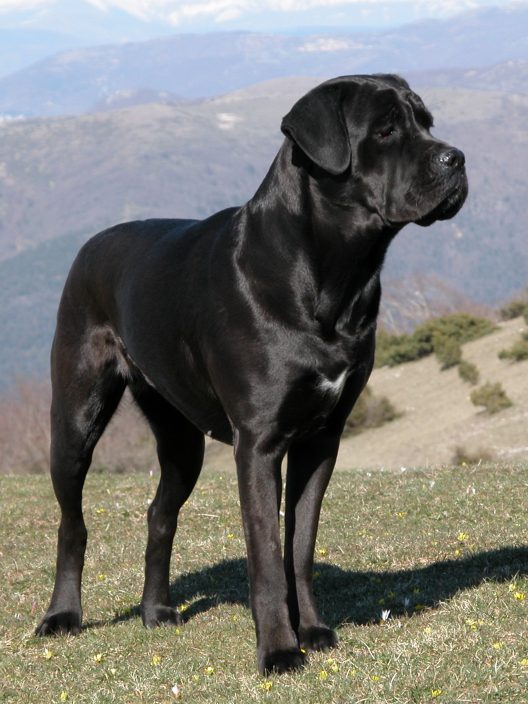
Which Mendelian variants matter most for Cane Corsos?
The Mendelian-disease table above lists variants screened in 145 Cane Corsos (Donner 2023). Four variants appear in the breed. All four appear at low carrier frequencies in the tested cohort. The honest summary is that Cane Corsos currently show fewer high-impact Mendelian variants than most large breeds in the testing cohort.
Degenerative Myelopathy (DM)
Degenerative myelopathy in Cane Corsos is an autosomal-recessive spinal-cord degeneration with incomplete penetrance. The disease causes progressive hind-limb weakness and eventual paralysis, typically emerging in middle age or later. About 2.1% of Cane Corsos in the Donner cohort carry one copy of the variant (n=145). Testing exists and is widely available through commercial labs and the Orthopedic Foundation for Animals.
The incomplete penetrance is important. Not every dog with two copies will develop clinical signs. Cane Corso breeders can use carrier status as one data point in pairing decisions, but a carrier dog may never become symptomatic.
Canine Multifocal Retinopathy 1 (CMR1)
Canine Multifocal Retinopathy 1 in Cane Corsos is an autosomal-recessive retinal condition discovered in Mastiff-related breeds. The disease causes multiple focal retinal lesions; most affected dogs retain functional vision, though lesion severity varies. Carrier frequency in the tested cohort was 1.4% (n=145). No phenotype-confirmed affected dogs appeared in the Donner S4 dataset (0/1 at-risk dogs), which suggests either very low penetrance or limited expression in this breed. Testing is available.
Hyperuricosuria (HUU)
Hyperuricosuria in Cane Corsos is an autosomal-recessive disorder of purine metabolism. Affected dogs excrete excess uric acid in urine and are predisposed to urate-stone formation in the bladder or kidneys. Carrier frequency in Cane Corsos is 0.69% (n=145). No phenotype-confirmed affected dogs appeared in the Donner cohort, and the condition is manageable with diet and monitoring when it does occur. Testing is available.
Cone-Rod Dystrophy (cord1-PRA/crd4)
Cone-rod dystrophy in Cane Corsos is an autosomal-recessive retinal dystrophy with incomplete penetrance. The disease affects cone and rod photoreceptors and can lead to progressive vision loss. Carrier frequency is 0.34% (n=145). Testing exists through commercial panels and breed-specific labs.
How should I test my Cane Corso?
The testing landscape for Cane Corsos is thinner than for more numerically dominant giant breeds. A panel covering DM, CMR1, HUU, and cord1-PRA captures the variants currently known in the breed. Work with your veterinarian and the American Cane Corso Association or breed-club health committee to confirm which panel best fits your breeding or selection goals.
What should I feed a Cane Corso?
Cane Corsos go from roughly 1 pound at birth to 100 to 130 pounds at adulthood. The growth rate is so fast that the calcium-to-phosphorus ratio in the puppy formula is the single most important food decision an owner makes. This matters more than breed-specific genetic disease because skeletal deformities from overfeeding calcium during growth can be permanent.
Puppy feeding for giant breeds is not a guessing game. The National Research Council recommends a calcium-to-phosphorus ratio between 1.1:1 and 2:1 for large-breed puppies, with absolute calcium levels kept between 0.8% and 1.6% on a dry-matter basis (NRC 2006). Cane Corso puppies fed excess calcium develop abnormal bone development, including osteochondrosis and angular-limb deformities (NRC 2006). A commercial large-breed puppy formula or a home-prepared diet balanced by a veterinary nutritionist is the responsible path. Avoid oversupplements and calcium-heavy treats during the growth phase.
Adult maintenance shifts to joint support and weight management. The breed’s low Mendelian-disease burden means the feeding priority for adults is preventing obesity and supporting joint longevity. Cane Corsos are mastiff-type dogs; activity levels vary by individual, but the breed is not classified as high-energy. A maintenance kibble formulated for large-breed adults, portioned to keep the dog lean (ribs visible, spine palpable but not prominent), is appropriate. The breed’s nearest genetic relatives (Neapolitan Mastiff, Mastiff) all benefit from controlled weight into old age.
Breed-specific cardiac screening is recommended before major diet changes. While the Mendelian cardiac-risk variants in this page do not include dilated cardiomyopathy risk, the breed’s size and mastiff heritage mean many individual dogs carry breed-typical cardiac risks. An echocardiogram or veterinary cardiac assessment before committing to grain-free or other restrictive diets is prudent. The FDA’s taurine-related DCM signal (2018 advisory, Adin et al. 2019) does not specifically flag Cane Corsos, but the breed’s size and unknown individual cardiac status make the conservative default a grain-inclusive, taurine-verified formulation.
What we don’t know
The Cane Corso’s small testing cohort (n=145) is the dominant limitation. Variants detected in other mastiff-type breeds may exist in Cane Corsos at lower frequencies than the current panel can detect. The substrate facts do not tell us about polygenic hip dysplasia heritability, elbow dysplasia prevalence, or the true carrier frequency of DM or other variants in the unscreened majority of the breed. The Orthopedic Foundation for Animals maintains health statistics by breed, but the Cane Corso’s sample size on OFA is modest compared to larger-registry breeds.
Cancer rates in Cane Corsos are not well-characterized in the published literature. Large and giant breeds carry elevated cancer burden, but the breed-specific epidemiology is not settled.
The breed’s founder cohort is small (Hayward2016=9, Parker=5, Spatola=4). This concentration of genetics may mean unmapped variants run at higher frequency than the current test panel can detect. Expanding the tested cohort would clarify the breed’s true Mendelian-disease burden.
Frequently asked questions about Cane Corsos
Are Cane Corsos healthy? Cane Corsos show lower Mendelian-disease burden than many large breeds in the current testing cohort. The dominant health priorities are skeletal development during growth, joint longevity, and cardiac screening. The breed’s small testing sample (n=145) means less common variants may not yet be characterized.
What is the most common genetic disease in Cane Corsos? Degenerative Myelopathy (DM) has the highest carrier frequency at 2.1% (Donner 2023, n=145). Because inheritance is autosomal recessive with incomplete penetrance, only dogs inheriting two copies are at risk, and not all of those will develop clinical signs. The other three variants (CMR1, HUU, cord1-PRA) are rare.
Should I do a DNA test on my Cane Corso? For breeding stock, testing for DM is recommended. A panel covering the four variants listed above captures the known Mendelian disease burden. Work with your breed club to determine which lab and panel best serves your breeding goals.
How large do Cane Corsos grow? Adult Cane Corsos typically weigh 100 to 130 pounds and stand 23.5 to 27.5 inches at the shoulder (AKC breed standard). The rapid growth from birth to adulthood (roughly 1 pound to 100+ pounds) means controlled puppy nutrition is critical.
What is the best diet for a Cane Corso puppy? A large-breed puppy formula with a calcium-to-phosphorus ratio between 1.1:1 and 2:1, absolute calcium between 0.8% and 1.6% dry matter (NRC 2006). Oversupplenting calcium or feeding adult formulas during the growth phase causes permanent skeletal damage. A veterinary nutritionist can balance a home-prepared diet if that is your preference.
Are Cane Corsos good family dogs? Cane Corsos are loyal, confident dogs bred as guardians. They require early socialization, consistent training, and an owner who understands the breed’s protective temperament. They are not a breed for first-time dog owners.
How long do Cane Corsos live? The breed’s median lifespan is not well-characterized in the published literature. Large and giant breeds typically live 8 to 8.1 years (McMillan 2024 / VetCompass), though breed-specific data for Cane Corsos remain limited in the published literature. Individual longevity depends on health screening, weight management, and early detection of age-related conditions.
Can Cane Corsos tolerate heat? Cane Corsos are large, heavy-boned dogs; size alone increases heat load, and owners should limit strenuous activity in warm weather. Their size and modest exercise needs mean they should avoid strenuous activity during warm weather. Access to shade, fresh water, and cool rest areas is essential year-round.