snıff

Doberman Pinscher

117 Doberman Pinschers in the atlas. Every number on this page has a source.

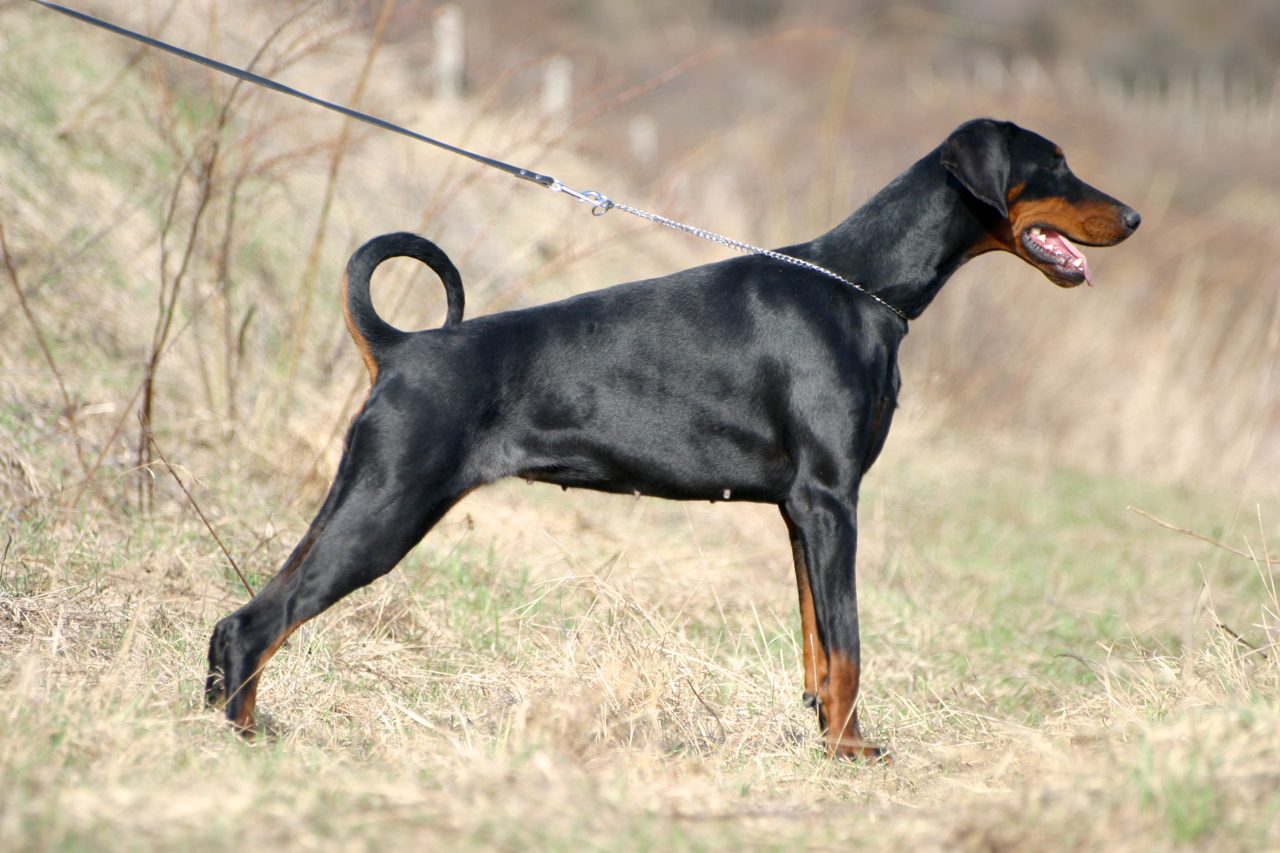
The Doberman Pinscher is a breed of remarkable intelligence, athleticism, and loyalty. Bred by Karl Friedrich Louis Dobermann to be the ideal personal

What the atlas says about Doberman Pinscher

In the atlas, the Doberman Pinscher clusters consistently as Doberman Pinscher (100% of the 117 dogs here). At the trait loci, LCORL runs lower than average (6% here vs 83%); STC2 runs lower than average (5% here vs 74%).

Ranks 10 of 107 on the bottleneck severity scale, among the most genetically contracted breeds in the atlas.

Closest genetic neighbors in the atlas: Giant Schnauzer, village dog Portugal, Great Pyrenees, village dog Dominican Republic, and village dog Peru Cusco.

Genetic dimensions · CanVAS atlas

What the genome says about Doberman Pinscher

Computed from the 18,477 research dogs in the Atlas.

Dogs in the Atlas
117Founders
39 from Momozawa, 25 from Hayward2016, 23 from Shannon
Genetic diversity
0.24Tight
Mean heterozygosity across the breed. Ranks 10th most genetically tight of 107 ranked breeds.
Cluster structure
Splits into two genetic sub-populations
Intra-breed RMS distance: 28.09 · likely working/show-line, regional, or kennel lineage split.
Nearest genetic relatives
  1. Giant Schnauzer5.82
  2. Village Dog Portugal6.08
  3. Great Pyrenees6.15
  4. Village Dog Dominican Republic6.49
  5. Village Dog Peru Cusco6.52
Top-10 PC corrected Euclidean. Lower = closer.
How long they live
11.2years (atlas median)
Trait genetics
Allele frequencies at named morphology loci

Frequency of the alternate allele in this breed at each locus's representative SNP.

Body size
IGF120%
HMGA21%
SMAD271%
LCORL6%
STC25%
ADAMTS1715%
Leg length
FGF4·CFA18100%
FGF4·CFA1297%
Coat
RSPO244%
FGF575%
KRT7166%
MC1R42%
Ear set
MSRB387%
Skull shape
BMP394%
SMOC277%
What you see when you look at a Doberman Pinscher

What does the genome say about how a Doberman Pinscher looks?

Doberman Pinschers look the way they do because of a small set of fixed and near-fixed morphology genes that, taken together, define the visible breed. Each translation below pairs the gene with the trait an owner actually sees, the breed's allele frequency at that locus, and a one-clause causal phrase.

Size and build

IGF1 is at 20% for the small-body allele, leaving the breed firmly in the larger end of the dog body-size spectrum.

HMGA2 is at 1%, leaving most of the size signal to other loci in the panel.

SMAD2 sits at 71% at the chromosome-7 height locus.

LCORL is at 6%, the NCAPG/LCORL height locus running against the breed's body-size profile here.

STC2 is at 5%, leaving the growth-axis signal to other loci.

ADAMTS17 is at 15%, the lower-frequency allele in this breed.

Leg length

The FGF4 retrogene on chromosome 18 is near-fixed in this breed at 100%. This is the leg-length variant. The breed is fully committed to the long-legged form rather than the short-legged Corgi-and-Dachshund body plan.

The FGF4 retrogene on chromosome 12 is near-fixed at 97%, the chondrodystrophic variant associated with intervertebral disc disease risk in breeds that carry it.

Coat type, length, and color

RSPO2 sits at 44% for the furnishings variant. Furnishings (the eyebrow-and-mustache pattern seen in Schnauzers and Wheaten Terriers) vary across the population at this intermediate frequency, and visible expression depends on the specific allele combination each dog carries.

FGF5 sits at 75% for the long-coat variant. Coat length is influenced by other loci as well, so intermediate FGF5 frequencies do not always correspond to intermediate visible coat lengths.

KRT71 sits at 66% for the wavy/curly variant. Coat curl varies across individuals at this intermediate frequency, and visible expression is also influenced by modifier loci.

MC1R sits at 42% at the representative SNP. MC1R controls the switch between red-to-gold pigment and black-to-brown pigment, with the e/e homozygous genotype producing the gold-to-red spectrum. Substrate frequencies at this SNP depend on the array's polarity, so visible coat color in the breed is a more reliable indicator than this single number.

Ears

MSRB3 is at 87% for the drop-ear allele, the genetic basis of the breed's signature dropped ear set.

Skull shape

BMP3 is at 94%, contributing to the breed's brachycephalic skull shape.

SMOC2 sits at 77%, contributing to the breed's moderate head shape.

Doberman Pinscher Dog Food: What Owners Need to Know

The Doberman Pinscher is a breed of remarkable intelligence, athleticism, and loyalty. Bred by Karl Friedrich Louis Dobermann to be the ideal personal companion and protector, they are a picture of aristocratic power and deep devotion. That heritage gives them a capable body, a sharp mind, and a constitution that is highly responsive to the right nutrition.

Here is the good news that most breed guides skip: the primary health challenge facing the Doberman Pinscher, heart health, is an area where nutrition provides a powerful set of tools. A longitudinal study found the prevalence of dilated cardiomyopathy (DCM) reached 44.1% in Dobermans over eight years old [Wess et al. 2010 (dcm prevalence)]. That number sounds high, and it is. But it also creates a clear, evidence-based path for owners who want to give their dogs a nutritional advantage.

Your nutritional choices are a primary lever for supporting your Doberman’s health. This guide gives you the information to use that lever effectively, turning daily feeding into a daily investment in your dog’s strength and well-being.

Last Verified: May 25, 2026 · 11 minute read · Methodology


TL;DR

Doberman owners have a unique opportunity to support their dog’s long-term heart health through informed food choices.

The breed has a high genetic predisposition to dilated cardiomyopathy (DCM). It is also one of the top five breeds most reported to the FDA in its investigation into diet-associated DCM, with 14 cases logged between 2014 and 2022 FDA, 2022. These facts don’t present a barrier, they create a clear path forward. The nutritional strategy for a Doberman is direct and evidence-based.

Sniff recommends a high-quality, grain-inclusive food from a manufacturer with a long track record of research and feeding trials. The diet should be built on high-quality, named animal proteins and fortified with cardiac-supportive nutrients like taurine. For this breed, we recommend choosing foods that do not rely heavily on legumes.


What makes feeding a Doberman different

The Doberman Pinscher is a large, muscular dog from the Working Group, built for intelligence, endurance, and power. Their athletic build and high activity level demand a diet that can fuel their body’s high-performance engine. This requires premium fuel, not just generic calories.

For an active 80-pound adult, the NRC recommends around 67 grams of crude protein per day just for maintenance NRC, 2006. This protein needs to be highly digestible and rich in the essential amino acids that build and repair the muscle that defines the breed. A diet that supports lean muscle mass is a cornerstone of supporting a Doberman’s overall health and, critically, their heart.

Generic dog foods can fall short. For a Doberman, whose health is so closely linked to lean body mass and cardiac function, a diet built on high-quality, bioavailable animal protein is an essential tool for long-term health.

The health profile: what you can actually influence

The Doberman’s health profile is centered on a few key areas where owners can make a significant, positive impact through nutrition and proactive care.

Dilated Cardiomyopathy (DCM)

This is the central health consideration for the breed and the area where your choices matter most. Dobermans have one of the highest genetic predispositions to DCM, a disease that causes the heart muscle to weaken and thin.

The numbers provide important context. The prevalence of DCM in Dobermans increases with age, reaching 44.1% in dogs over 8 years old [Wess et al. 2010 (dcm prevalence)]. This genetic predisposition is compounded by a documented sensitivity to diet-associated DCM. Dobermans were one of the top 5 most-reported breeds to the FDA in its investigation FDA, 2022. This clarifies the path forward. Choosing a well-researched, grain-inclusive diet is a powerful, proactive step. For Dobermans, a conservative, evidence-based diet is not a limitation, it’s an advantage. For a deeper look, read our full guide to diet-associated DCM.

Orthopedic Health

Dobermans are large dogs, but they are built efficiently. The Orthopedic Foundation for Animals (OFA) reports a hip dysplasia prevalence of 6.6% based on 14,845 evaluations OFA. This is a relatively low rate for a large breed, but it underscores the importance of lifelong weight management.

Their elbows are exceptionally sound. The OFA database shows just a 0.7% prevalence of elbow dysplasia across over 12,000 evaluations, one of the lowest rates for any large breed OFA.

Maintaining a lean body condition throughout your dog’s life is the most effective tool for protecting their joints. Every extra pound adds stress, so keeping them lean is a daily investment in their mobility and comfort.

Other Conditions

Hypothyroidism: The breed has a known predisposition to thyroid issues. OFA data shows that of 34,711 Dobermans evaluated, 4.6% tested positive for autoimmune thyroiditis, and 25.1% had equivocal results that warrant monitoring OFA. This is a manageable condition that highlights the value of regular veterinary care.

Copper Toxicosis (Copper Hepatopathy): A genetic mutation can cause some Dobermans to accumulate copper in their liver. A European study found a carrier frequency of 35% [Mandigers et al. 2004 (copper)]. While not all carriers develop the disease, it’s a known variable. This is another area where genetic screening and working with a knowledgeable vet provides a clear advantage. We cover this in our guide to copper hepatopathy in dogs.

Puppy years: building a powerful foundation

The first 18 to 24 months are a window of opportunity to build the strongest possible Doberman. During this rapid growth phase, your nutritional strategy lays the foundation for their entire adult life.

The most important lever is promoting controlled, steady growth. For large-breed puppies like Dobermans, the National Research Council recommends a dietary calcium level of 1.2% on a dry matter basis NRC, 2006. The goal is to provide exactly what their skeleton needs to develop properly, without the excess that can accelerate growth unnaturally.

A large-breed puppy formula from a reputable brand is engineered for this purpose. These foods have a precisely controlled calcium-to-phosphorus ratio to support healthy bone growth. They are typically built on high-quality animal proteins like chicken meal or fish meal to provide the building blocks for their developing muscles.

Adult years: fueling a high-performance athlete

Once your Doberman reaches skeletal maturity around age two, the focus shifts from building the frame to fueling the engine. The goals are to support their active lifestyle, maintain a lean body condition, and provide proactive support for their heart and joints.

An active 80-pound Doberman needs a diet that provides approximately 67 grams of high-quality protein per day to maintain their powerful musculature NRC, 2006. Look for foods where named animal proteins are the first ingredients.

Weight management is one of the most powerful tools you have. You should be able to easily feel your Doberman’s ribs under a thin layer of covering, and they should have a visible waist. Adjust feeding amounts based on their individual condition and activity level. This is also the time to be deliberate about diet choice in the context of DCM. Stick with well-researched, grain-inclusive diets. Ingredients like fish oil, a source of omega-3 fatty acids, support overall health, while adequate levels of taurine and L-carnitine are essential for cardiac function.

Senior years: supporting lifelong strength

For a Doberman, the senior years begin around age seven or eight. This is a natural transition, and the right nutritional strategy can help them maintain their strength and vitality. This is when the genetic risk for DCM becomes most prominent, making a focused nutritional approach more important than ever.

It is essential to know that senior dogs need more high-quality protein, not less. The outdated idea of feeding a low-protein “senior” diet is counterproductive. Older dogs are prone to sarcopenia, the age-related loss of muscle mass. Higher-quality, more digestible protein helps them maintain the muscle that supports their joints and their heart.

The goal is to preserve lean muscle on a lean frame. The diet should be protein-dense, highly digestible, and calorie-controlled to prevent weight gain as their metabolism naturally slows. This is the formula for a strong, comfortable senior Doberman.

What Sniff recommends and why

Given the Doberman’s specific health profile, particularly the dual risk of genetic and diet-associated DCM, our recommendations are conservative and guided by an evidence-based, precautionary approach.

We recommend a food that is grain-inclusive, from a brand that conducts and publishes peer-reviewed research and employs full-time veterinary nutritionists. The formula should feature multiple high-quality, named animal proteins at the top of the ingredient list. We want to see ingredients like chicken, lamb meal, and fish oil, not vague terms.

For this breed, we recommend Doberman owners choose foods that do not rely heavily on legumes like peas, lentils, and chickpeas. The correlation between these formulas and diet-associated DCM is a variable that owners can and should control.

For specific, vetted product recommendations that meet these criteria, see our list of the best dog foods for Doberman Pinschers.

What we don’t know

The biggest open question remains the precise mechanism behind diet-associated DCM. While we have strong correlational data, the exact cause is still an active area of research. We don’t yet know why some dogs on certain diets develop DCM while many others do not. We also lack a definitive understanding of the interplay between the Doberman’s genetic DCM and diet. It is unclear if a specific diet can accelerate the onset of the genetic form of the disease.

Heart disease is the most common cause of death in the breed, accounting for 20.3% of mortalities in one study, and the median survival time after a DCM diagnosis is 4.6 months [Oneill et al. 2013 (lifespan)]. These statistics underscore the importance of proactive screening and following evidence-based nutritional strategies. The median lifespan for the breed is 10.5 years, a figure that researchers and dedicated owners are working to improve by focusing on the nutritional and genetic factors we can control. Finally, while a DNA test exists for one copper toxicosis gene, the full picture of copper metabolism in the breed is not yet known.

Frequently asked questions

What is the best brand of dog food for a Doberman? The brand matters less than the company’s commitment to research. We recommend foods from companies that conduct feeding trials and employ veterinary nutritionists. Find our specific picks on the best dog food for Doberman Pinschers list.

Is a grain-free diet safe for my Doberman? We recommend caution. Given the breed’s high risk for both genetic and diet-associated DCM, grain-free diets, especially those high in legumes like peas, are a variable that owners can control. We recommend grain-inclusive foods from well-researched brands. Read our full guide on the DCM controversy for more detail.

When should I switch my Doberman to a senior food? Around age 7 or 8. Ensure the senior food is rich in high-quality protein to combat age-related muscle loss. The goal is a protein-dense diet that may be slightly lower in calories to match a slower metabolism.

Can I feed my Doberman a raw diet? We don’t recommend it. The risks of nutritional imbalance and bacterial contamination are significant, and there is no scientific evidence they offer benefits over a high-quality, well-formulated commercial diet, especially for a breed with such specific health considerations. Our methodology details our position on raw diets.

What ingredients should I avoid in Doberman food? Avoid foods with high concentrations of peas, lentils, and other legumes. Also, be wary of vague ingredients like “meat by-products” and artificial preservatives like BHA and BHT. For more, see our guide on controversial ingredients.

How often should I feed my Doberman? Twice a day is ideal. Feeding two smaller meals instead of one large one can help prevent bloat, a serious condition in deep-chested breeds. It also helps maintain stable energy levels.

Does my Doberman need supplements like taurine? A high-quality, complete and balanced diet should not require supplementation. Reputable commercial foods are formulated to be nutritionally complete. If your veterinarian has diagnosed a specific deficiency, follow their advice.


The bigger picture

To own a Doberman is to share your life with one of the most capable, intelligent, and loyal companions in the canine world. They are a breed of incredible presence and sensitivity, offering a partnership that is truly unique.

Feeding a Doberman well is one of the most direct ways to honor the gift of their companionship. The science is clear on what helps: a well-researched, grain-inclusive diet, high-quality protein, and a lean body condition. You don’t need a veterinary degree to get this right. You just need the information, and now you have it.

Every meal you choose is a daily investment that compounds over time. It’s building the muscle that supports their athletic frame. It’s fueling the heart that is so full of devotion to you. It’s a quiet, consistent act of care for the incredible dog by your side.

You know what your Doberman needs. Trust that.


Last Verified: May 25, 2026. This page is informational and does not constitute veterinary advice. If your Doberman Pinscher has a health condition, consult a veterinarian, ideally one who is board-certified in internal medicine (DACVIM) or nutrition (DACVIM-Nutrition). Read our full methodology and our the Pledge.

The data behind this page

Where every number on this page came from.

This page draws on three primary data sources. Carrier frequencies for the Mendelian section come from Donner et al. 2023 (CC-BY-4.0). We grade these data at evidence Limited because the cohort is a direct-to-consumer ascertainment, which biases toward owners who chose to test their dogs. The panel also uses tag-SNP proxies for some variants rather than direct causal-variant assays. Limited is a study-design grade, not a quality grade: the Donner cohort is the largest open canine-genotype dataset in existence and we are grateful for it. We rate the confounding MEDIUM.

Population-genetic dimensions (heterozygosity, intra-breed PCA distance, nearest neighbors, trait-locus frequencies) come from CanVAS (Brundage 2026), harmonized through the Sniff Atlas. The exact release date and verification commit are pinned at the bottom of the page so a researcher can trace a number back to a specific snapshot. The disease-gene-variant graph comes from OMIA (Online Mendelian Inheritance in Animals; Nicholas, Tammen, and the Sydney Informatics Hub at the Sydney School of Veterinary Science, The University of Sydney; retrieved April 2026, DOI 10.25910/2AMR-PV70).

What this page does not yet have. Inheritance modes and per-disease penetrance evidence from Donner 2023 are now in the structured data for every variant the panel covers. Mondo, OMIM, Ensembl, and HGNC cross-references on gene pages remain pending — they arrive in December 2026 alongside the imputed 9.67M-variant CanVAS dataset via the OMIA SQL dump absorption. Until then, gene IDs carry NCBI Gene and OMIA phene URLs only; the wider human-homolog and disease-ontology cross-reference set fills in with that release.

How to cite this page. The computed dimensions on this page are derived from the open Sniff Atlas v1.0.1 (Gehring 2026, doi:10.5281/zenodo.20566358, CC-BY 4.0). Full citation formats including BibTeX, RIS, and CITATION.cff at sniff.world/cite.

Add your doberman pinscher to the atlas

We have 117 doberman pinschers. We do not have yours.

Every doberman pinscher added sharpens the breed's genetic neighborhood. Enrollment is free. The data stays open. The star is permanent.

Want to wait for DNA uploads?

Leave your email and we'll let you know the moment DNA uploads open for Doberman Pinschers.

References
  1. Donner J, Anderson H, Davison S, et al. (2023). Frequency and distribution of 152 genetic disease variants in over 1,000,000 mixed-breed and purebred dogs. PLOS Genetics 19(2):e1010651. doi:10.1371/journal.pgen.1010651
  2. Brundage J, et al. (2026). CanVAS: a harmonized canine variant atlas. bioRxiv. doi:10.64898/2026.04.13.718238
  3. Nicholas, F.W., Tammen, I., & Sydney Informatics Hub. (2026). Online Mendelian Inheritance in Animals (OMIA) [dataset]. The University of Sydney. https://omia.org. doi:10.25910/2AMR-PV70 (retrieved April 2026).
Last updated
Sources: CanVAS (Brundage 2026) · Donner 2023 · OMIA