Irish Terrier
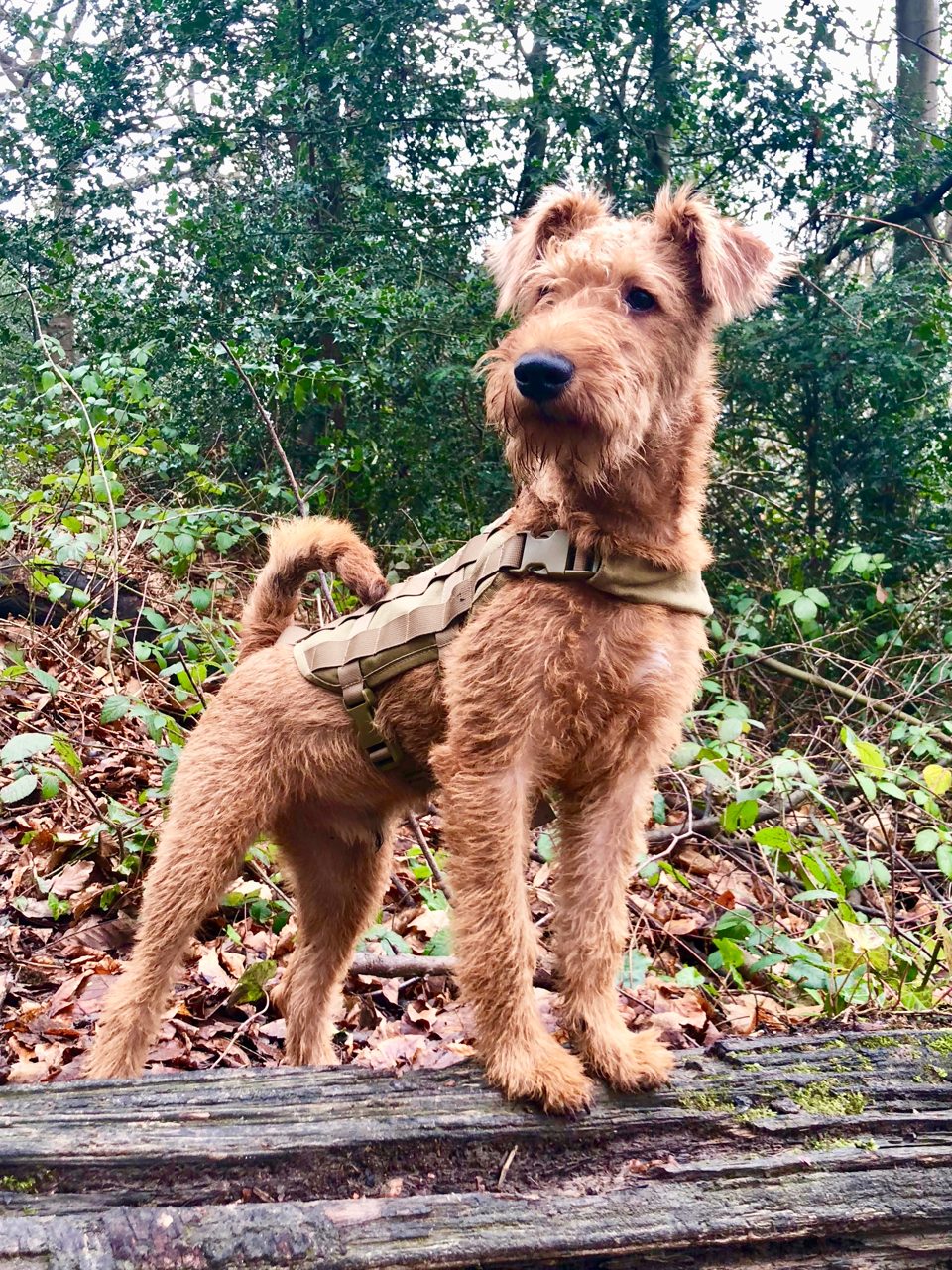
8 Irish Terriers in the atlas. Every number on this page has a source.
8 Irish Terriers in the Sniff Atlas. Population-genetic snapshot, Mendelian carrier frequencies from Donner 2023, and the data substrate's release version, sample sizes, and evidence tier on every claim.
Also known as Irish Red Terrier.
Irish Terriers come from a somewhat limited gene pool, meaning they have a bit of inbreeding compared to some other breeds. Because the information comes from a small number of dogs, this picture might change with more data. One health note is that their gene pool includes a risk factor linked to heart health seen in other breeds; it’s a good idea to talk with your vet or consider genetic testing to keep your dog’s heart in check.
In the atlas, the Irish Terrier clusters consistently as Irish Terrier (100% of the 8 dogs here). At the trait loci, HMGA2 runs higher than the atlas average (100% here vs 56%); SMAD2 runs lower than average (31% here vs 74%). Dogs here sit in a relatively sparse region of the atlas, fewer close neighbors than typical.
Only 8 dogs of this breed in the atlas, every individual contributes outsized weight to the breed's computed profile.
What the genome says about Irish Terrier
Computed from the 18,477 research dogs in the Atlas.
Not enough dogs in the atlas yet (n=8) for a reliable diversity figure. It fills in as more are added.
What does genetic diversity mean?
How varied a breed's gene pool is — the share of gene spots where a typical dog of the breed carries two different versions rather than two identical ones.
How to read it: Higher = more diverse. Among well-sampled breeds it ranges roughly 0.22 (least diverse) to 0.33 (most diverse).
Diversity is a strength, not a verdict on any individual dog. Lower diversity means it's worth paying attention to recessive-risk testing — not that a dog is doomed.
Not enough dogs in the atlas yet (n=8) to resolve cluster structure. It fills in as more are added.
What does within-breed variation mean?
How much individual dogs within the breed differ from each other genetically.
How to read it: Higher = more internal variety among individuals of the breed.
Sensitive to how many dogs of the breed we've sampled.
What does typical lifespan mean?
The median age dogs of the breed tend to reach.
How to read it: Higher = longer-lived. Compare to longevity-for-size to see whether it's just a size effect.
Drawn from population lifespan records; individual dogs vary widely with care, genetics, and luck.
Frequency of the alternate allele in this breed at each locus's representative SNP.
Not enough Irish Terriers in the atlas yet (n=8) for reliable allele frequencies at these loci. It fills in as more are added.
Other names
The Irish Terrier is also recorded as Irish Red Terrier.
Identified as Irish Terrier (VBO:0200704) in the Vertebrate Breed Ontology (Mullen et al. 2025, CC-BY 4.0) · registry IDs FCI 139 · iDog 132 · VeNom 15008.
What does the genome say about how a Irish Terrier looks?
Irish Terriers look the way they do because of a small set of fixed and near-fixed morphology genes that, taken together, define the visible breed. Each translation below pairs the gene with the trait an owner actually sees, the breed's allele frequency at that locus, and a one-clause causal phrase.
Where the breed-defining genes act, mapped on a generic dog-body key — and how fixed each marker is in the Irish Terrier. The figure is the most-settled marker we read in that region; the full per-locus panel is below. (The silhouette is a shared anatomical guide, not this breed's outline.)
Size and build
IGF1 is at 0% for the small-body allele, leaving the breed firmly in the larger end of the dog body-size spectrum.
IGF1what this gene does
IGF1 is a gene that plays a key role in determining a dog's body size. It influences how much a dog grows, affecting overall stature.
For your dog: Knowing about IGF1 gives you insight into your dog's size traits, but it’s just one part of the bigger picture when it comes to their health and care.
Full IGF1 gene page →HMGA2 is near-fixed at 100%, reinforcing the breed's size signal through a second locus on chromosome 10.
HMGA2what this gene does
HMGA2 is a gene that influences body size in dogs, helping determine how big or small a dog grows.
For your dog: Knowing about HMGA2 helps you appreciate the genetic factors behind your dog's size, but it doesn't signal any health issues.
Full HMGA2 gene page →SMAD2 sits at 31% at the chromosome-7 height locus.
SMAD2what this gene does
SMAD2 is a gene involved in regulating body size by influencing how cells grow and develop.
For your dog: Knowing about SMAD2 helps understand your dog's size traits but isn't linked to health issues; no immediate action needed.
Full SMAD2 gene page →LCORL is near-fixed at 100%, the NCAPG/LCORL height locus that is one of the strongest single contributors to canine body size.
LCORLwhat this gene does
LCORL is a gene that influences body size in dogs. It helps determine how big or small a dog might grow.
For your dog: Knowing about LCORL helps you appreciate the genetic factors behind your dog's size, but it’s just one piece of the bigger picture when it comes to health and care.
Full LCORL gene page →STC2 sits at 75%.
ADAMTS17 sits at 50%. ADAMTS17 is a body-size locus also linked to lens disorders.
ADAMTS17what this gene does
ADAMTS17 is a gene that influences body size and also plays a role in certain eye conditions. It affects the structure of tissues in the eye and elsewhere in the body.
For your dog: If your dog belongs to a breed known to carry ADAMTS17 variants, it’s worth discussing genetic testing and eye exams with your vet to stay ahead of potential issues.
Full ADAMTS17 gene page →Leg length
The FGF4 retrogene on chromosome 18 sits at 69%. This is the leg-length variant. The intermediate frequency means some dogs in this breed carry the short-legged allele and some do not.
The FGF4 retrogene on chromosome 12 sits at 81%, the chondrodystrophic variant.
Coat type, length, and color
RSPO2 is at 0% for the furnishings allele. The breed does not carry the eyebrows-and-mustache pattern of Wheatens, Schnauzers, or wire-haired terriers.
RSPO2what this gene does
RSPO2 influences the texture and appearance of a dog's coat, particularly the presence of 'furnishings' like mustaches and eyebrows. It helps determine whether a dog has that distinctive wiry or textured look.
For your dog: If your dog has those wiry eyebrows or a mustache, RSPO2 is part of the reason, no health worries, just a coat feature worth knowing about.
Full RSPO2 gene page →FGF5 sits at 38% for the long-coat variant. Coat length is influenced by other loci as well, so intermediate FGF5 frequencies do not always correspond to intermediate visible coat lengths.
FGF5what this gene does
FGF5 is a gene that influences the length of a dog's coat. It acts like a natural switch, telling hair follicles when to stop growing longer fur.
For your dog: If your dog has a notably long or short coat, FGF5 is likely part of the reason, no action needed, but it’s a neat genetic detail to know.
Full FGF5 gene page →KRT71 is near-fixed at 100% for the wavy/curly variant. Coat curl phenotype varies across breeds at this fixation depending on modifier loci, and visible expression is not always curled even when the locus is fixed.
KRT71what this gene does
KRT71 is a gene that influences the curliness of a dog's coat. It helps determine whether a dog's fur is straight or has a distinctive curl.
For your dog: If your dog has a curly coat, KRT71 is likely part of the reason; it’s a natural variation, not a health concern.
Full KRT71 gene page →MC1R is at 100% at the representative SNP. MC1R controls the switch between red-to-gold and black-to-brown pigment, with the e/e homozygous genotype producing the gold-to-red spectrum by blocking eumelanin (black and brown pigment).
MC1Rwhat this gene does
MC1R is a gene that influences coat color in dogs, affecting how pigments are produced in the fur.
For your dog: Knowing about MC1R gives insight into your dog's coat color but doesn't relate to health issues.
Full MC1R gene page →Ears
MSRB3 is at 0% for the drop-ear allele, keeping the breed's ears upright and prick.
MSRB3what this gene does
MSRB3 is a gene involved in the development of ear shape and structure in dogs.
For your dog: Understanding MSRB3 helps explain why your dog's ears look the way they do, but it isn't linked to any health issues.
Full MSRB3 gene page →Skull shape
BMP3 is at 0%, keeping the breed in the dolichocephalic, long-headed form.
BMP3what this gene does
BMP3 is a gene that influences the shape of a dog's skull, particularly contributing to a shorter, broader head shape known as brachycephaly.
For your dog: If your dog has a broad, short skull, it's worth discussing with your vet how this might impact their health, even though BMP3 isn't directly tied to illness.
Full BMP3 gene page →SMOC2 sits at 81%, contributing to the breed's moderate head shape.
SMOC2what this gene does
SMOC2 influences the shape of a dog's skull, particularly affecting how flat or short the face appears.
For your dog: If your dog has a short nose, it's worth discussing with your vet how this trait might impact their health over time.
Full SMOC2 gene page →What genetic diseases do Irish Terriers carry?
From a panel of 250 Mendelian-disease variants screened in 1,054,293 dogs (Donner et al. 2023), Irish Terriers carry 3 of them at observable frequency. Carrier frequency is not clinical risk. Most recessive variants require two copies for disease expression; many dominant variants show incomplete penetrance. Read this as a population fingerprint of what's in the gene pool, not a per-dog prediction.
PDK4what this gene does
PDK4 helps regulate how cells use energy, especially in the heart muscle.
For your dog: If your dog is one of the breeds known to carry this gene, it’s worth discussing heart health with your vet, but being a carrier doesn’t mean your dog will develop disease.
SOD1what this gene does
SOD1 is a gene that helps protect cells from damage caused by harmful molecules called free radicals.
For your dog: If your dog is a carrier of SOD1 variants, it's worth discussing with your vet, but remember carrier status doesn't mean your dog will get the disease.
GDNFwhat this gene does
GDNF is a gene that helps support nerve cells, especially those involved in sensing pain and movement.
For your dog: If your dog is from a breed that can carry this gene change, it’s worth asking your vet about testing to understand any potential risks.
Irish Terriers are a natural model for human disease
Because the same genes cause the same conditions across species, the inherited conditions documented in Irish Terriers help researchers understand, and work toward treating, the human diseases they model. This is the dog advancing human medicine. The breed models the human disease; it does not have it, and this is not a prediction for your dog.
- OMIM:608245, modeled by the breed's Curly coat, the same underlying biology.
- Darier disease, modeled by the breed's Darier disease, the same underlying biology.
- OMIM:615886, modeled by the breed's Hyperkeratosis, palmoplantar, FAM83G-related, the same underlying biology.
- OMIM:602307, modeled by the breed's Muscular dystrophy, the same underlying biology.
- Duchenne muscular dystrophy, modeled by the breed's Muscular dystrophy, Duchenne type, the same underlying biology.
Every condition recorded in the Irish Terrier
Beyond the testable carriers above, OMIA's literature catalogue records 7 genetic conditions in the Irish Terrier, 5 of which have a known human equivalent. This is the documented landscape across all Irish Terriers ever studied, not a prediction for any one dog.
- Curly coat AutosomalHuman equivalent: OMIM:608245
- Darier disease Autosomal dominantHuman equivalent: Darier disease
- Hyperkeratosis, palmoplantar, FAM83G-related Autosomal recessiveHuman equivalent: OMIM:615886
- Human equivalent: OMIM:602307
- Muscular dystrophy, Duchenne type X-linked recessiveHuman equivalent: Duchenne muscular dystrophy
Where every number on this page came from.
This page draws on three primary data sources. Carrier frequencies for the Mendelian section come from Donner et al. 2023 (CC-BY-4.0). We grade these data at evidence Limited because the cohort is a direct-to-consumer ascertainment, which biases toward owners who chose to test their dogs. The panel also uses tag-SNP proxies for some variants rather than direct causal-variant assays. Limited is a study-design grade, not a quality grade: the Donner cohort is the largest open canine-genotype dataset in existence and we are grateful for it. We rate the confounding MEDIUM.
Population-genetic dimensions (heterozygosity, intra-breed PCA distance, nearest neighbors, trait-locus frequencies) come from CanVAS (Brundage 2026), harmonized through the Sniff Atlas. The exact release date and verification commit are pinned at the bottom of the page so a researcher can trace a number back to a specific snapshot. The disease-gene-variant graph comes from OMIA (Online Mendelian Inheritance in Animals; Nicholas, Tammen, and the Sydney Informatics Hub at the Sydney School of Veterinary Science, The University of Sydney; retrieved April 2026, DOI 10.25910/2AMR-PV70).
What this page does not yet have. Inheritance modes and per-disease penetrance evidence from Donner 2023 are now in the structured data for every variant the panel covers. Mondo, OMIM, Ensembl, and HGNC cross-references on gene pages remain pending, they arrive in December 2026 alongside the imputed 9.67M-variant CanVAS dataset via the OMIA SQL dump absorption. Until then, gene IDs carry NCBI Gene and OMIA phene URLs only; the wider human-homolog and disease-ontology cross-reference set fills in with that release.
How to cite this page. The computed dimensions on this page are derived from the open Sniff Atlas v1.0.1 (Gehring 2026, doi:10.5281/zenodo.20566358, CC-BY 4.0). Full citation formats including BibTeX, RIS, and CITATION.cff at sniff.world/cite.
What science cannot measure about living with a irish terrier.
Lived experience is a different register from the cited numbers above. It is not a source for any health claim on this page. When a Keeper's words appear here, they are placed as written, credited as chosen.
The people who kept this breed hold a kind of knowing that never makes it into a database.
If you have loved a irish terrier, living or gone, you can leave a piece of that knowing here. We read every one. The pieces that move us are placed on this page in your words, credited exactly as you ask.
We have 8 irish terriers. We do not have yours.
Every irish terrier added sharpens the breed's genetic neighborhood. Enrollment is free. The data stays open. The star is permanent.
- Donner J, Freyer J, Davison S, Anderson H, Blades M, Honkanen L, et al. (2023). Genetic prevalence and clinical relevance of canine Mendelian disease variants in over one million dogs. PLOS Genetics 19(2):e1010651. doi:10.1371/journal.pgen.1010651
- Brundage J, et al. (2026). CanVAS: a harmonized canine variant atlas. bioRxiv. doi:10.64898/2026.04.13.718238
- Nicholas, F.W., Tammen, I., & Sydney Informatics Hub. (2026). Online Mendelian Inheritance in Animals (OMIA) [dataset]. The University of Sydney. https://omia.org. doi:10.25910/2AMR-PV70 (retrieved April 2026).